How sleep cycles work
What the four stages of sleep are, how cycles change through a sleep period, and why the 90-minute figure is an average rather than a rule.

Vera
If you've ever read that a sleep cycle is exactly 90 minutes, or that you need exactly five of them to feel rested, the picture is gentler than that. Sleep moves in cycles, but the cycles vary, and so does the right amount of sleep for any one person. The shape is more useful than the precise numbers.
What a sleep cycle is
A sleep period is built from repeating sleep cycles. Each cycle moves through a sequence of stages, three of non-REM sleep and one of REM sleep:
- N1 is the short drift from awake into sleep, usually a few minutes.
- N2 is light sleep. It usually makes up the largest share of a sleep period.
- N3 is deep sleep, sometimes called slow-wave sleep. This stage is associated with physical restoration, including tissue repair, bone and muscle growth, and immune function (NCBI Bookshelf).
- During REM sleep, brain activity becomes more similar to waking, the eyes move rapidly behind closed lids, and most larger muscles temporarily lose tone (NHLBI).
The pattern of these stages makes up your sleep architecture. The stages repeat, but not in identical proportions each time.
The 90 minutes you've heard about
A typical cycle averages around 90 minutes, and a full sleep period often contains four to six cycles. That's where the familiar figure comes from. Less familiar is the spread around it. Real cycles often last 70 to 120 minutes, and they don't all match each other. The first cycle is often the shortest, and later cycles tend to run longer.
The makeup of each cycle shifts too. Deep sleep clusters early in a sleep episode, while REM periods usually lengthen as sleep continues. Slow-wave sleep is driven mostly by the pressure that builds while you are awake, whereas REM is more strongly influenced by circadian timing (Circadian System, Sleep and Endocrinology). That distinction matters for daytime sleep and changing schedules: stage balance follows both time asleep and the internal clock, not just the hour on a clock.
So when a sleep calculator suggests waking in 90-minute steps, treat it as a planning average. The math is a starting point. Your cycles may run shorter or longer during any given sleep period.
What each stage seems to do
Every stage appears to contribute. Deep sleep is associated with physical restoration, and REM is linked to memory, learning, and creativity. N2 makes up the largest share of sleep. These functions overlap, and researchers are still studying exactly what each stage does.
When a sleep period ends early, later REM-rich cycles are more likely to be missed. The effect still depends on circadian timing and accumulated sleep pressure, so a rule such as "sleeping late always costs deep sleep" is too simple. Sleep timing and sleep duration both matter.
How much you actually need
A common assumption is that everyone needs eight hours. The CDC recommends seven or more hours per day for adults ages 18 to 60, with different guidance for other ages. Individual needs still vary. Eight hours is a familiar reference point, not a fixed target.
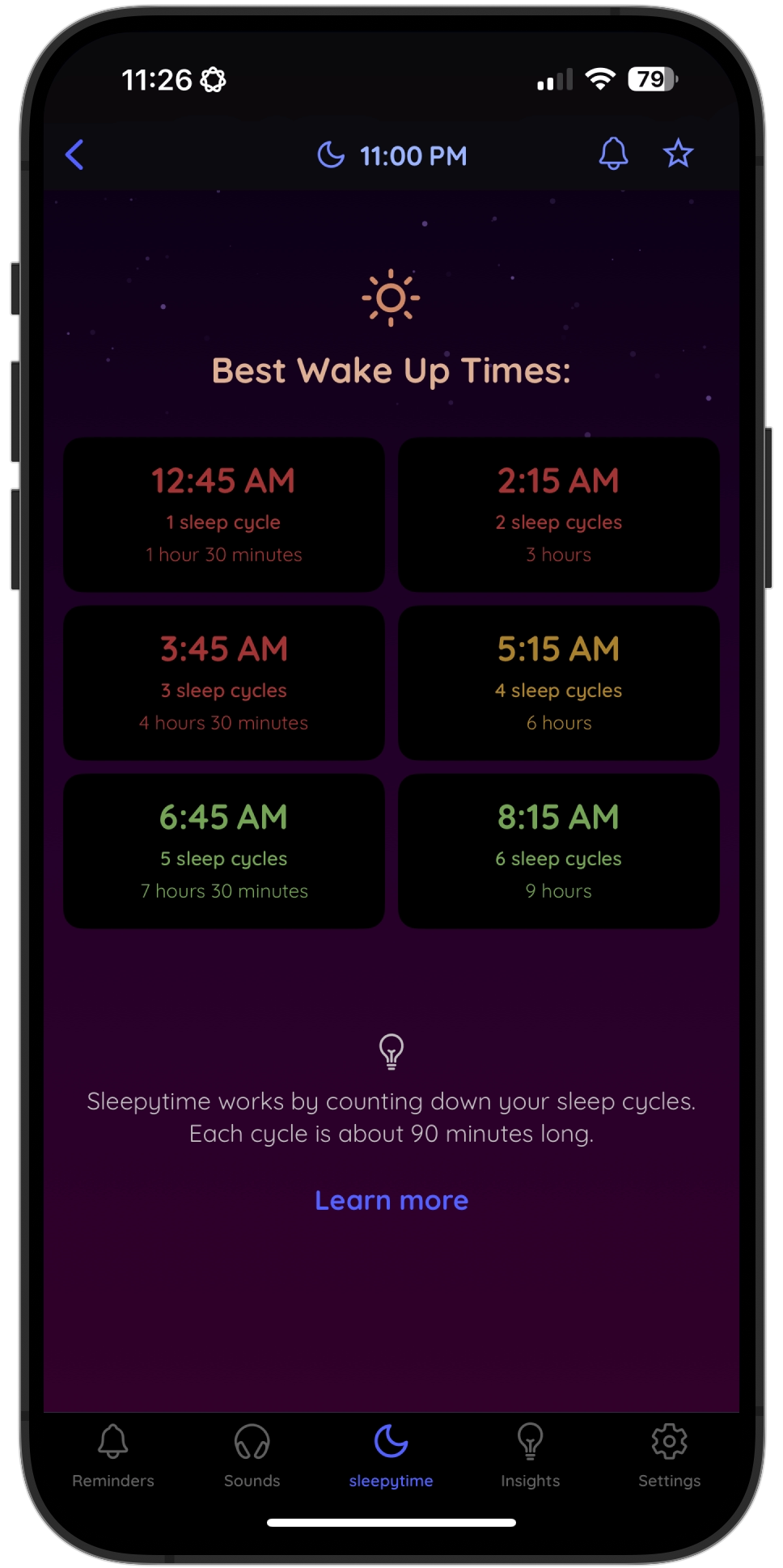
sleepytime uses 90-minute cycles as a simple planning model. Waking from deep sleep can contribute to sleep inertia, but the calculator does not measure your actual stages and cannot predict an exact light-sleep window. Give enough total sleep the higher priority, then use the suggested times as estimates and notice which wake-ups feel easier over time.