Como funcionam os ciclos de sono
O que são os quatro estágios do sono, como os ciclos mudam ao longo de um período de sono e por que 90 minutos são uma média, não uma regra.

Vera
Se você já leu que um ciclo de sono dura exatamente 90 minutos, ou que são necessários exatamente cinco ciclos para acordar com disposição, a realidade é mais flexível. O sono avança em ciclos, mas a duração deles varia, assim como a quantidade de sono de que cada pessoa precisa. Entender a estrutura é mais útil do que se prender aos números exatos.
O que é um ciclo de sono
Um período de sono é formado por ciclos que se repetem. Cada ciclo passa por uma sequência de estágios: três estágios de sono não REM e um de sono REM:
- N1 é a transição breve entre a vigília e o sono, geralmente com poucos minutos de duração.
- N2 é o sono leve e costuma ocupar a maior parte de um período de sono.
- N3 é o sono profundo, também chamado de sono de ondas lentas. Esse estágio está associado à recuperação física, incluindo reparação de tecidos, crescimento de ossos e músculos e funcionamento do sistema imunológico (NCBI Bookshelf).
- Durante o sono REM, a atividade cerebral se aproxima mais da vigília, os olhos se movem rapidamente atrás das pálpebras fechadas e a maior parte dos músculos grandes perde temporariamente o tônus (NHLBI).
O padrão formado por esses estágios compõe a arquitetura do sono. Eles se repetem, mas não mantêm as mesmas proporções em todos os ciclos.
Os 90 minutos de que você já ouviu falar
Um ciclo típico dura, em média, cerca de 90 minutos, e um período completo de sono costuma ter de quatro a seis ciclos. É daí que vem o número tão citado, mas a variação recebe menos atenção: os ciclos reais muitas vezes duram de 70 a 120 minutos e não são todos iguais. O primeiro costuma ser o mais curto, enquanto os seguintes tendem a durar mais.
A composição de cada ciclo também muda. O sono profundo se concentra no início de um episódio de sono, enquanto os períodos de REM geralmente ficam mais longos conforme o sono continua. O sono de ondas lentas é impulsionado principalmente pela pressão que se acumula durante a vigília, enquanto o sono REM é mais influenciado pelo ritmo circadiano (Circadian System, Sleep and Endocrinology). Essa diferença importa para quem dorme durante o dia ou muda de horário: o equilíbrio entre os estágios depende tanto da duração do sono quanto do relógio interno, não apenas da hora do dia.
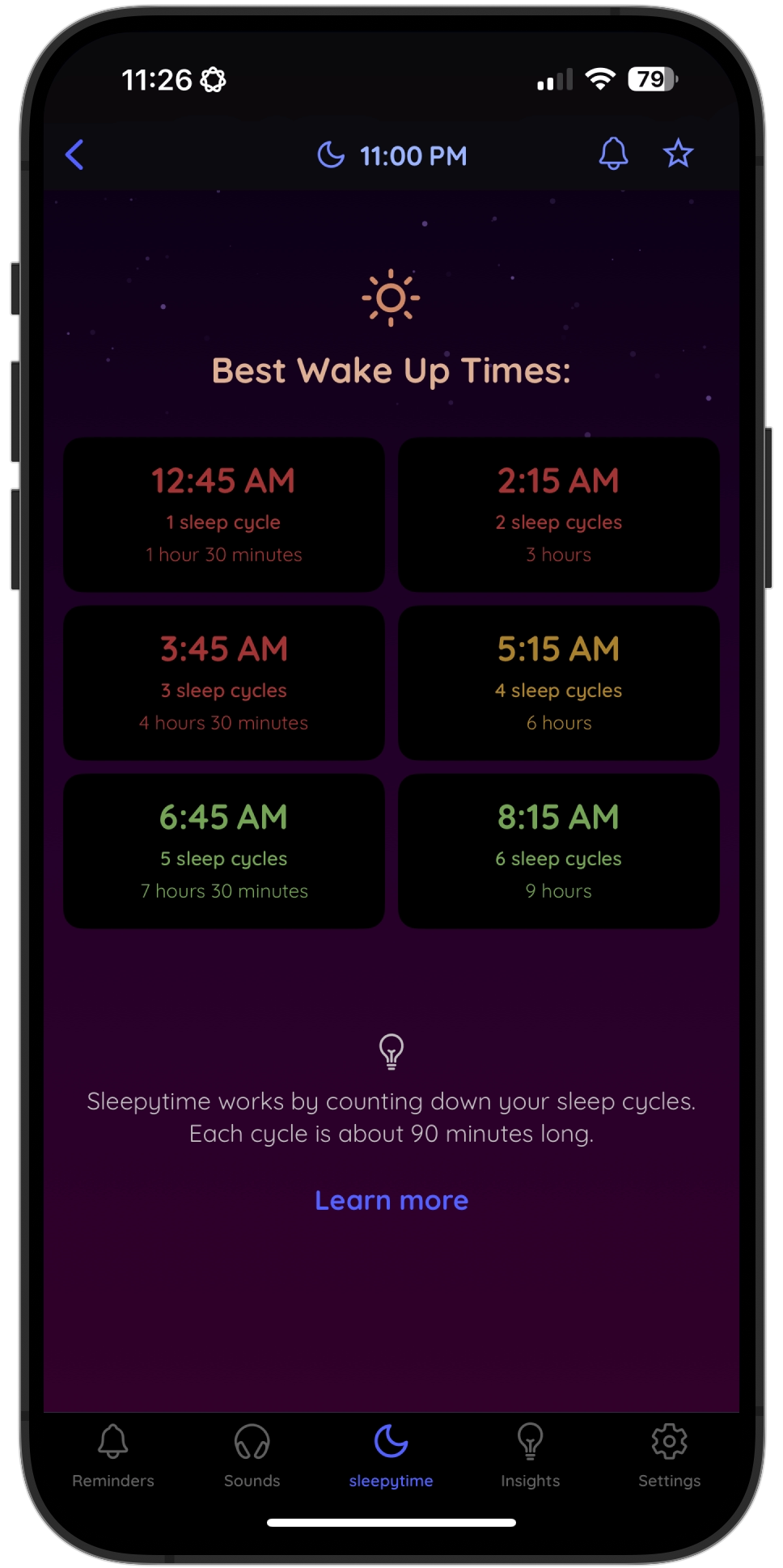
Assim, quando uma calculadora de sono sugere horários para acordar em intervalos de 90 minutos, considere esse número uma média de planejamento. A conta é um ponto de partida, e os ciclos podem ser mais curtos ou mais longos em qualquer período de sono.
O que cada estágio parece fazer
Todos os estágios parecem contribuir. O sono profundo está associado à recuperação física, e o sono REM está ligado à memória, à aprendizagem e à criatividade. O N2 ocupa a maior parte do sono. Essas funções se sobrepõem, e pesquisadores ainda estudam o papel exato de cada estágio.
Quando um período de sono termina cedo, é mais provável perder os ciclos posteriores, mais ricos em REM. O efeito ainda depende do ritmo circadiano e da pressão do sono acumulada, então uma regra como "dormir mais tarde sempre reduz o sono profundo" simplifica demais. Tanto o horário quanto a duração do sono fazem diferença.
De quanto sono você realmente precisa
É comum supor que todas as pessoas precisam de oito horas. O CDC recomenda sete horas ou mais por dia para adultos de 18 a 60 anos, com orientações diferentes para outras idades. As necessidades individuais ainda variam, e oito horas são uma referência conhecida, não uma meta fixa.
O sleepytime usa ciclos de 90 minutos como um modelo simples de planejamento. Acordar durante o sono profundo pode contribuir para a inércia do sono, mas a calculadora não mede os estágios reais e não consegue prever uma janela exata de sono leve. Dê prioridade a uma duração total de sono suficiente; depois, use os horários sugeridos como estimativas e observe, ao longo do tempo, quais despertares parecem mais fáceis.