How sleepytime works
A short explainer on sleep cycles and how the calculator picks its suggested times.

Vera
The sleepytime calculator suggests sleep and wake times using a simple cycle estimate. It cannot see which sleep stage you are in, so treat the suggestions as planning options rather than exact cycle boundaries.
The gist:
- sleepytime starts with a configurable fifteen-minute estimate for falling asleep. You can adjust it in settings.
- A full sleep period commonly contains four to six sleep cycles. Their length varies, with ninety minutes serving as a useful average.
- Waking from deeper sleep can contribute to grogginess, but sleep inertia has several possible influences.
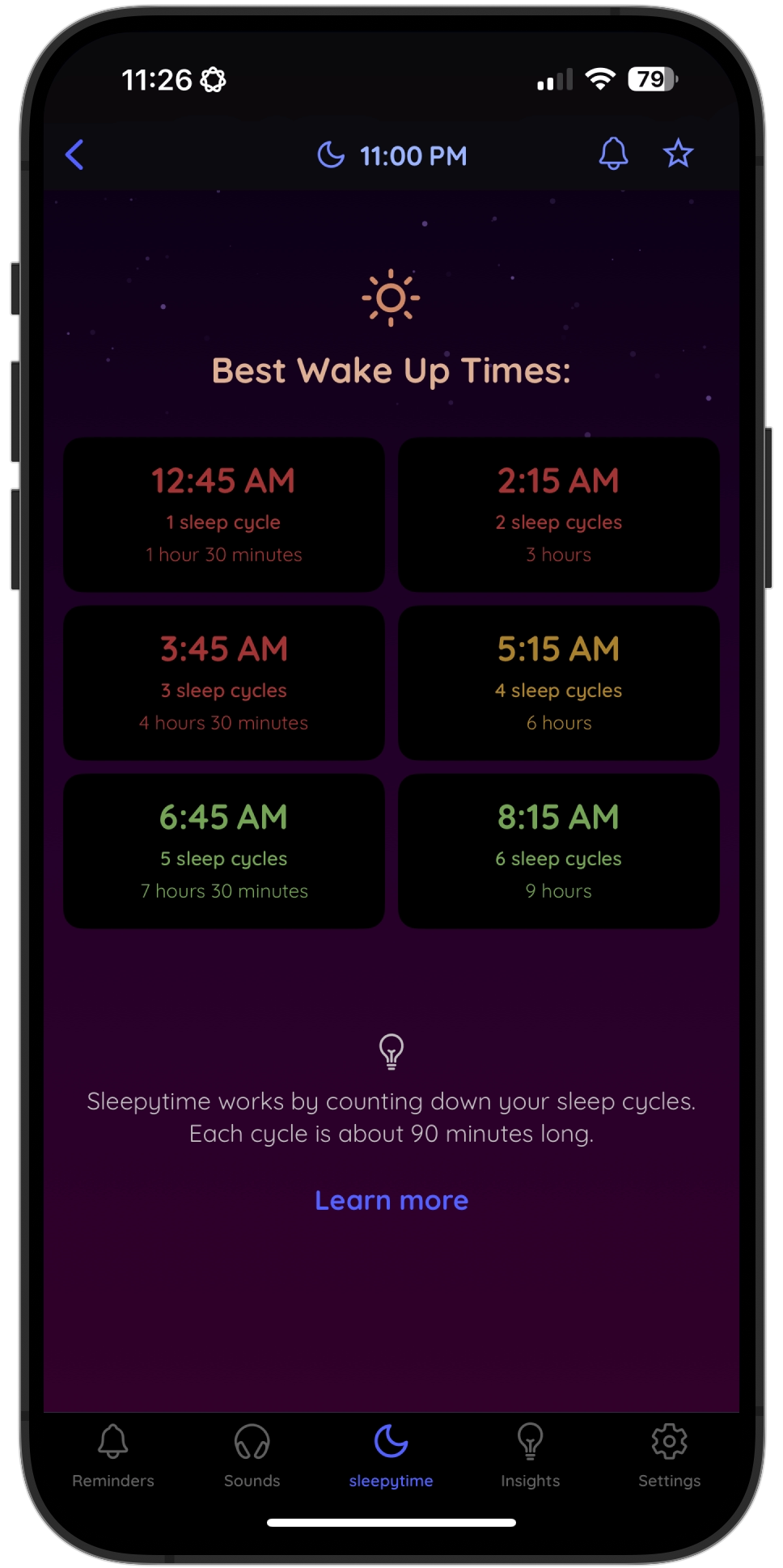
- Tell sleepytime when you need to wake or when you plan to sleep, and it uses ninety-minute steps to offer practical estimates.
How the calculator picks a time
Give sleepytime a wake-up time or a time you plan to sleep, and it applies a ninety-minute planning model. It also adds the sleep-onset estimate from your settings, which defaults to fifteen minutes.
If you need to wake at 7:00 and you're aiming for five estimated cycles, sleepytime counts back seven and a half hours, then applies the onset estimate from your settings.
You'll see several options at once, each one estimated cycle apart. Choose one that gives you enough total sleep and fits the time you have.
When the numbers are approximate
Cycle length varies with age, sleep pressure, circadian timing, caffeine, and other factors. The calculator does not track your actual sleep stages, so its suggestions are a starting point, not a rule. For more on what happens inside a cycle, read how sleep cycles work.