How to sleep better
A calm look at what actually helps with sleep, and a few common pieces of advice worth letting go of.

Vera
Most advice about sleep starts by telling you what you're doing wrong, which is a strange way to talk to someone who's tired. Before any rules, a small reassurance: one shorter sleep period does not define your health, and most helpful changes are gentle. This article clears away a few common ideas that can make sleep harder and replaces them with what the research supports.
When sleep doesn't come, leave the bed
The instinct, when sleep won't come, is to stay put and try harder. That tends to backfire. The bed slowly becomes associated with being awake and frustrated, and the harder you push, the more awake you feel.
The clinical alternative is called stimulus control. The American Academy of Sleep Medicine's guideline describes it plainly: go to bed only when sleepy, get out of bed when you're unable to sleep, and use the bed for sleep only. If it feels as though you have been awake for roughly twenty minutes, without watching the clock, get up, keep the lights low, do something quiet like reading, and return when you feel drowsy again (AASM clinical practice guideline).
It can feel counterintuitive when you're already tired. Stimulus control is one component of cognitive behavioral therapy for insomnia (CBT-I), which the AASM recommends as a multicomponent treatment for chronic insomnia. For long-running sleep trouble, a clinician can guide the full program.
Alcohol can make sleep feel easier at first
A glass of wine often feels like it helps. It can shorten the time to fall asleep, which is the part you notice. What happens a few hours later usually escapes attention.
As the body clears the alcohol, sleep can become lighter and more fragmented later in the sleep period, and REM sleep may be reduced (Sleep Foundation, medically reviewed). You may not remember brief awakenings, but feeling sleepy after a drink is not the same as getting better-quality sleep.
Whether to drink is your call. The piece worth letting go of is the idea that alcohol reliably improves sleep.
Caffeine lasts longer than you'd guess
Caffeine has a long tail. In a small controlled study, twelve participants received 400 mg of caffeine at planned sleep time, three hours before, or six hours before. Sleep was disrupted in all three conditions compared with placebo (Drake et al., 2013).
That was a large dose, and individual responses vary. If sleep has been difficult, moving your last caffeine earlier relative to planned sleep for a week is a low-cost experiment.
A cooler, darker room
Two small adjustments to your sleep space can help. Core body temperature falls as you fall asleep, and a comfortably cool room can support that shift. Around 18°C (roughly 65°F) may be a useful starting point for some adults, but there is no single ideal number for everyone (Sleep Foundation).
The other piece is light. The CDC's basic sleep guidance includes keeping the sleep space quiet, dark, and cool, and turning off electronic devices at least thirty minutes before sleep (CDC). If your main sleep happens during daylight, blackout curtains or an eye mask can make that advice practical. Even partial dimming can help the space feel more settled.
What this looks like in practice
You do not need to change everything at once. For your next sleep period, try one earlier caffeine cutoff, a comfortably cool space, or a quiet agreement that you will get up calmly if you have been awake for a while. One experiment is enough to work with.
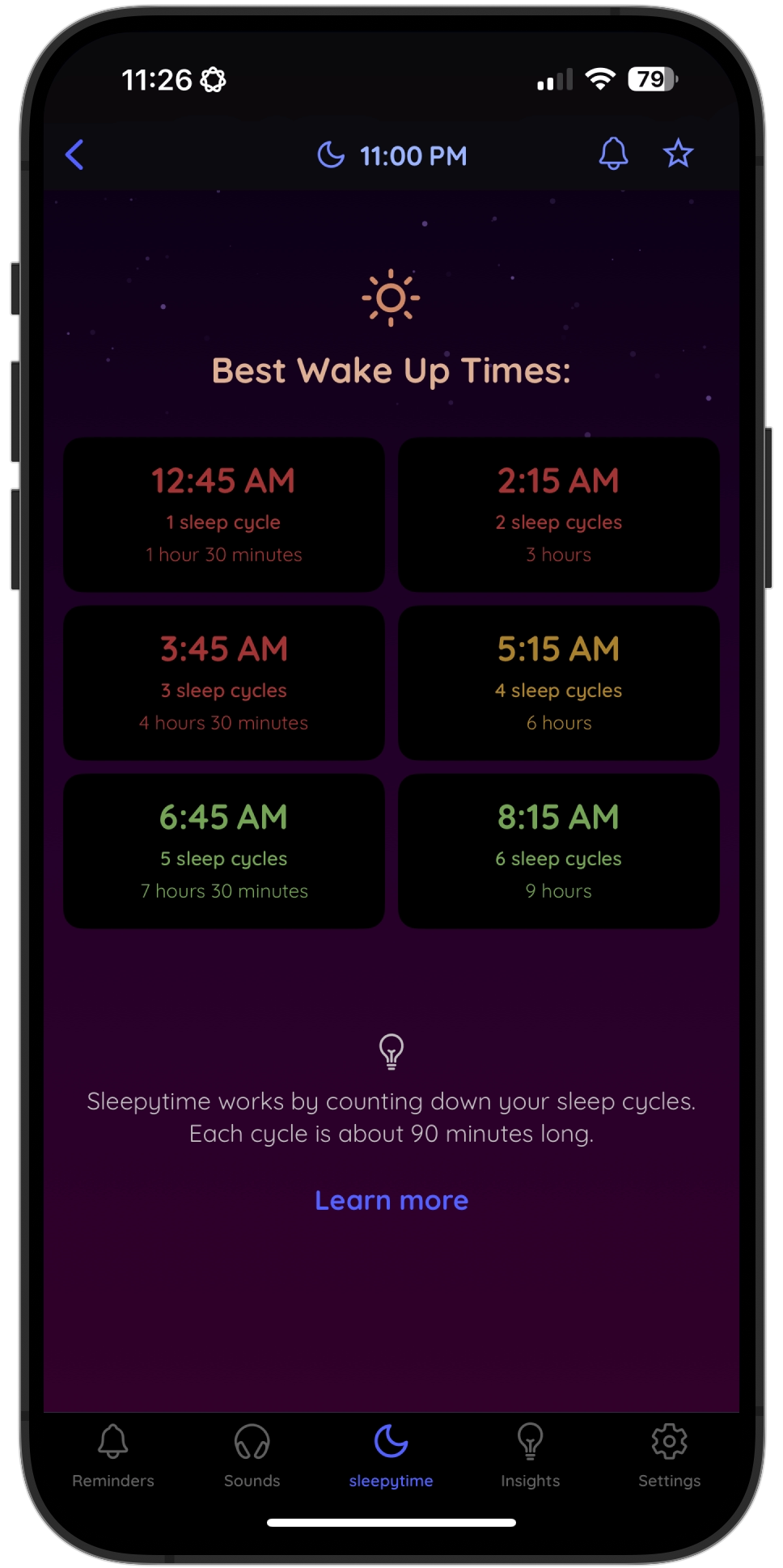
sleepytime can help you find a sleep time that matches when you need to wake. Treat that suggestion as a planning estimate, then give yourself a little room to wind down before it.