Why getting enough sleep matters
What sleep is quietly doing for your body and brain, how much you may need, and why the longer pattern matters more than one short sleep period.

Vera
It is hard to know how much sleep is enough, and easy to worry after a short sleep period. One difficult sleep does not define your health. The longer pattern is usually more useful to notice than any single day.
What sleep is quietly doing
Sleep can look like nothing is happening, which makes it easy to underestimate. Inside, the brain and body remain active, supporting processes involved in memory, tissue repair, immune function, focus, mood, and judgment.
The NHLBI describes sleep as important for learning, emotional regulation, and how you interact with other people. None of that requires a perfect sleep period. It depends more on getting enough sleep often enough.
How much you actually need
Eight hours is a familiar figure, but it is a reference point, not a universal target. The CDC recommends seven or more hours per day for adults ages 18 to 60, with age-specific guidance for other groups.
Within those ranges, individual sleep need varies. Some adults feel rested around seven hours, while others need closer to nine. Notice how easily you wake, how steady you feel during your waking period, and whether sleepiness interferes with daily life. Those patterns can help you discuss your needs with a clinician if something feels off.
The catch with running on less
A common belief is that you can adapt to five or six hours of sleep if you do it long enough. In a controlled study of two weeks of sleep restriction, groups limited to four or six hours per sleep opportunity developed accumulating cognitive performance deficits. Their ratings of sleepiness rose much less than the measured drops in attention and reaction time.
That gap is useful to know. Sleep debt can be quiet. Feeling adapted to a shorter schedule does not necessarily mean attention and reaction time have recovered.
A gentler way to think about it
One short sleep period is common, and its effects vary. The larger concern is a repeated pattern of not getting enough sleep. In one laboratory study, two nights of recovery sleep did not prevent the metabolic changes linked to a repeating five-hour sleep schedule (Depner et al., 2019). Extra sleep can help, but it is not a substitute for regularly getting enough.
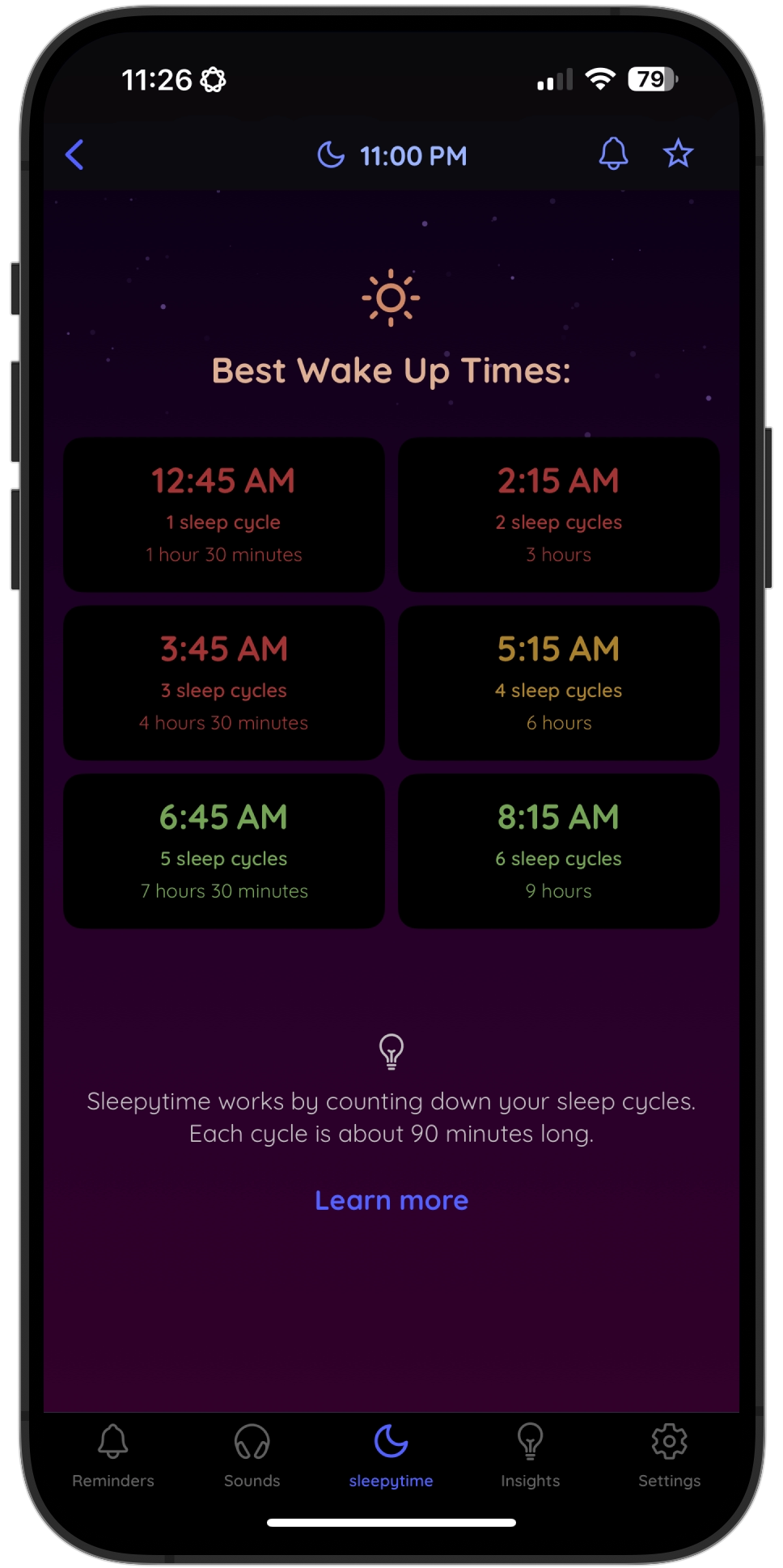
If you are using sleepytime to plan when to sleep and when to wake, give enough total sleep the higher priority. The calculator can offer timing estimates, while the pattern across your sleep periods is what adds up.