Five gentle ways to sleep before something important
Trying to force sleep before something important can backfire. These five evidence-informed ideas can make a little more room for rest.

Vera
Before something important, the instinct may be to change your schedule and try hard to fall asleep. That effort can leave you more alert. One difficult sleep does not define your health, but it can affect attention and reaction time, so the gentlest plan is to make room for sleep without demanding perfection.
1. Step away when sleep will not come
When sleep will not come, clock-watching and staying in the sleep space while frustrated can reinforce wakefulness. Stimulus control, one component of cognitive behavioral therapy for insomnia (CBT-I), asks you to get up when unable to sleep, keep the light low, do something quiet, and return when sleepy again (AASM guideline).
You do not need to time the moment precisely. Notice when you feel awake and frustrated, step away calmly, and come back when drowsiness returns.
2. Lower the lights and set the phone aside
During the wind-down before planned sleep, dimming bright light and setting aside engaging content may help reduce alerting cues. Bright artificial light can signal wakefulness, while messages and videos may keep the mind engaged (NHLBI healthy sleep habits). If your phone is also your alarm, set it once and leave it out of easy reach.
3. Go easy on caffeine and alcohol
Caffeine can interfere with sleep for hours, and sensitivity varies. If it seems to affect you, moving the last serving earlier relative to planned sleep is a simple experiment. Alcohol may make it easier to fall asleep but can lead to lighter, more interrupted sleep later (NHLBI).
4. Make the sleep space comfortable
A sleep space that feels cool, dark, quiet, and comfortable can help. Block light where you can, soften noise with earplugs or background sound, and adjust temperature and bedding to your comfort (NHLBI). If sleep happens during daylight, light-blocking curtains or an eye mask can be especially useful.
5. Trust that one imperfect sleep is not a verdict
One short sleep period can make attention, reaction time, and decisions harder, and the effect varies between people (NHLBI). It does not mean the next waking period is ruined. If you feel sleepy, make the plan gentler and avoid driving or safety-critical work when possible.
None of this asks for a perfect routine. Choose one or two ideas that fit your next sleep period, keep expectations soft, and let rest be enough.
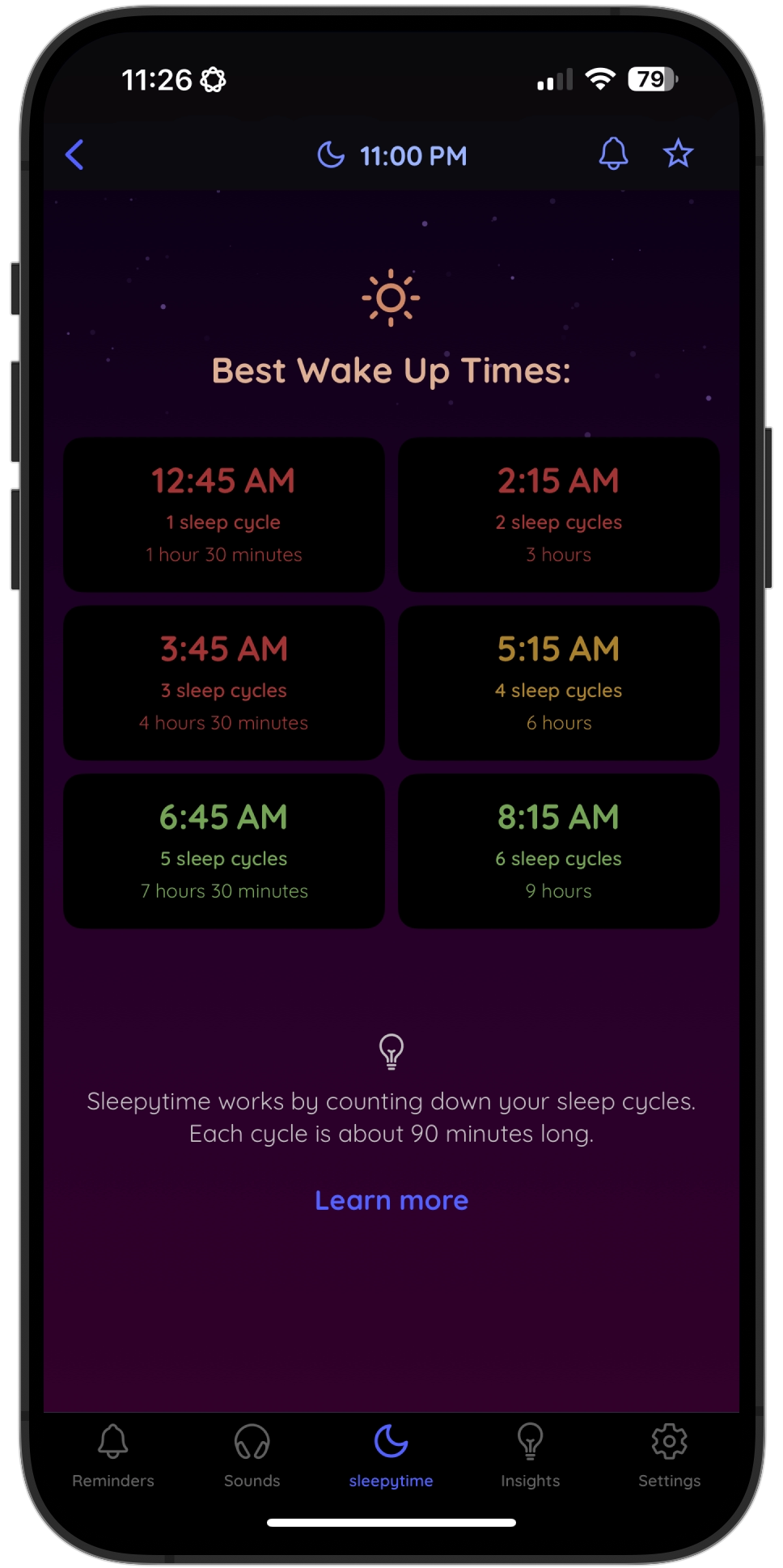
If choosing sleep and wake times is the hard part, sleepytime can do the planning math.